All Art Culture

Showing posts with label Africa. Show all posts

Thursday, May 17, 2012

Monastery of Saint Pishoy

The Monastery of Saint Pishoy in Wadi El Natrun (the Nitrian Desert), Beheira Governorate, Egypt, is the most famous Coptic Orthodox monastery named after Saint Pishoy. It is the easternmost monastery among the four current monasteries of the Nitrian Desert.


Foundation and ancient history

The monastery was founded by Saint Pishoy in the fourth century AD. On 13 December 841 AD (4 Koiak) 557 AM, Pope Joseph I fulfilled the desire of Saint Pishoy and moved his body as well as that of Saint Paul of Tammah to this monastery. Up to that date, the bodies of the two saints were at the monastery of Saint Pishoy at Deir el-Bersha. Today, the two bodies lie in the main church of the Coptic Orthodox Monastery of Saint Pishoy in the Nitrian Desert.


Modern history

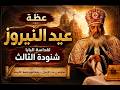
Today, the Monastery of Saint Pishoy contains the relics of Saint Pishoy, Saint Paul of Tammah, as well as the relics of other saints. Eyewitnesses recount that the body of Saint Pishoy remains in incorruption until the present day. It is also the resting place of The Thrice Blessed Pope Shenouda III.

The monastery has five churches, the main one being named after Saint Pishoy. The other churches are named after the Virgin Mary, Saint Iskhiron, Saint Georges, and Archangel Michael. The monastery is surrounded by a keep, which was built in the fifth century AD to protect the monastery against the attacks of the Berbers. An initial castle was built early in the twentieth century, but was later replaced by a four-storied castle built by Pope Shenouda III. In addition, the monastery contains a well known as the Well of the Martyrs. Coptic tradition says that the Berbers washed their swords in this well after having killed the Forty Nine Elder Martyrs of Scetes, and subsequently threw the bodies of the martyrs in the well before Christians buried the bodies in the nearby Monastery of Saint Macarius the Great. Under the reposed Pope of the Coptic Orthodox Church, Pope Shenouda III, the Monastery of Saint Pishoy began to expand, with new land around the monastery purchased and developed. Cattle breeding, and poultry dairy facilities were also developed. Ancient buildings and churches were also restored, and cells for monks, retreat houses, a residence for the Coptic Pope, annexes for a reception area, an auditorium, conference rooms as well as fences and gates were built.


The current abbot

The current bishop and abbot of the Monastery of Saint Pishoy is His Grace Sarapamon (Serapis Amon).


Other monasteries named after Saint Pishoy

The Monastery of Saint Pishoy at Deir El Barsha at Deir el-Bersha, near Mallawi
The Monastery of Saint Pishoy at Armant, east of Armant


Other monasteries of the Nitrian Desert

The Monastery of Saint Macarius
The Syrian Monastery
The Paromeos Monastery


http://en.wikipedia.org/wiki/Monastery_of_Saint_Pishoy

Share

Wednesday, May 16, 2012

Processional Cross


Date: 14th – 15th century

Geography: Ethiopia, Lasta region

Culture: Ethiopia, Lasta region

Medium: Brass

Dimensions: H. 10 1/2 x W. 5 in. (26.7 x 12.7cm)

Classification: Metal-Sculpture

Credit Line: Purchase, Elaine Rosenberg Gift and funds from various donors, 1998

Accession Number: 1998.37

This artwork is currently on display in Gallery 351
The Metropolitan Museum of Art.


Description

The history of Christianity in Ethiopia is longstanding, dating back to the fourth century a.d. At that time, King Ezana, ruler of Aksum, made it the court religion. In spite of the antiquity of Ethiopian Christian art, however, processional crosses antedating the seventeenth century are rare due to sixteenth-century Islamic incursions that devastated the region.

Crosses such as this were commonly given to important monasteries by Ethiopian monarchs; in return, the clergy would remember the donors in prayers. Like many early Ethiopian crosses, this one was cast in brass using the lost-wax method. Since lost-wax objects must be made individually and are necessarily unique, this casting technique may have encouraged the experimentation that has yielded a spectacular diversity of Ethiopian metal crosses.

This processional cross has short side arms and longer vertical arms, features it shares with related Coptic and Byzantine traditions. Later crosses would equalize the length of the arms and fill in the gaps between them, almost dissolving the cross form into a diamond shape that was punctuated with interlacing patterns. The beginnings of the latter tendency can be seen here, particularly in the negative spaces that replicate the cross form at its three terminal points and the rectangular openings within its arms. Openings like these were both practical and aesthetic; they allowed crosses to be made larger without added weight, and when used in processions made impressive silhouettes against the open sky. At the base of the metal cross, just above its point of attachment to a long staff (no longer extant), are a pair of loops that served an additional purpose. These would have provided a place to affix the colored cloths that trailed from processional crosses while they were in use. A subtle counterpoint to these open spaces, shallow engraved lines thinly trace the stepped shape of the cross and enliven its broad planes with geometric patterns.

Until more recent times, Ethiopian processional crosses favored abstract openwork patterns and images of the Virgin and Child above the depiction of the Crucifixion scene. In part this reflects the view of the Ethiopian Orthodox Church, which does not see the cross solely in terms of Christ's Passion but also as the "Tree of Life in the midst of the Garden" (Genesis 2:9) and a vehicle of God's blessing to man.

Processional crosses play an active role in Christian religious life in Ethiopia, where churches commonly have one or more. They are prominently featured during services and processions that honor holy days such as the Epiphany or the feast of the Finding of the True Cross. Held aloft by clergy wearing ceremonial attire and accompanied by colorful umbrellas, these crosses imbue sacred occasions with reverential majesty.


http://www.metmuseum.org/Collections/search-the-collections/50010546

Share

Friday, December 30, 2011

Fort Santa Cruz

Fort Santa Cruz is a fort located in Oran City, Algeria. It is one of the 3 forts of Oran City and is interconnected with the two other forts by tunnels. Fort Santa Cruz was built between 1577 and 1604 by the Spaniards. The fort is located at a height of about 400 meters on Mount Murdjadjo.


Fort Santa Cruz, Oran is one of the three forts in Oran, the second largest port city of Algeria; the other two forts are Fort de la Moune at the western end of the port and Fort St. Philippe, a replacement of the old castle of the Saints known in Spanish as Castillo de los Santos, at the centre of Oran. The three forts are connected by tunnels. Fort Santa Cruz was built between 1577 and 1604 by the Spaniards on the Pic d’Aidour above Gulf of Oran in the Mediterranean Sea, at an elevation of above 400 metres (1,312 ft). In 1831, the French occupied Oran and the fort.


A small chapel, known as the Chapel of Santa Cruz, stands close to the fort. This chapel has been refurbished with a tower, which has a huge statue of the Virgin Mary, said to be a replica of that at Notre Dame de la Garde in Marseilles, styled as Notre Dame de la Salut de Santa Cruz.


http://en.wikipedia.org/wiki/Fort_Santa_Cruz,_Oran

http://en.wikipedia.org/wiki/File:Oran_Santa_Cruz.JPG
http://en.wikipedia.org/wiki/File:ChapelleSantaCruz2.jpeg


Share

Sunday, December 4, 2011

The Crucifixion of Jesus Christ and the life of Bishop Selama


The Crucifixion of Jesus Christ and the life of Bishop Selama, painting by an unknown artist

Height: 230 cm
Width: 180 cm

Donated by James Theodore Bent

1893,11-12.1

Around AD 1855
From Tigray, Ethiopia

Ethiopia has a very long and rich tradition of painting. As early as AD 620 two wives of The Prophet Mohammed described the beauty of the murals of St Mary Zion Church at Aksum. Most painters were priests and monks who learnt the art of painting under the guidance of an experienced church artist. Their work was commissioned by wealthy Ethiopians and illustrated and explained stories from the Bible and of the lives of saints. Church art was intended to be both informative and to inspire devotion.

This painting was made for the church of the Saviour of the World at Adwa in northern Ethiopia. As with most Ethiopian church paintings we do not know the name of the artist.

The main purpose of this painting was to inspire devotion through the depiction of Christ's crucifixion. It shows several episodes from the crucifixion story as if taking place at the same time. Christ’s followers are shown at the foot of the cross with tears running down their faces. The Virgin Mary is supported by St John the Evangelist, and Mary Magdalene embraces Christ’s feet.

Near the base of the cross is the skull of Adam – according to the Bible, the first man on earth. The crucifixion took place at Golgotha, the exact place where Adam was believed to be buried. Christ’s blood pours into the skull, indicating that the blood of Christ will bring salvation to everyone.

Around the edge of the painting there are 11 smaller scenes which celebrate the life of Bishop Selama, Head of the Ethiopian Orthodox Church from 1841 to 1867. The painting also depicts the coronation of Emperor Tewodros II  in 1855. Dejazmatch Wube and Biru Goshu, key political figures in the mid nineteenth-century Ethiopian politics of church and state are also shown.

Church paintings at this time were an important means of communication and observers would have been able to identify the recent events shown.

The painting was donated to the British Museum by the archaeologist James Theodore Bent in 1893 and is part of a comprehensive collection of Ethiopian material he put together while travelling in Ethiopia.

British Museum conservators have recently relined the painting and mounted it on a flat board. This helps preserve it, while a full analysis of the painting carried out by Museum scientists has allowed a greater understanding of the construction of the painting.


http://www.britishmuseum.org/explore/highlights/highlight_objects/aoa/c/crucifixion_of_jesus_christ.aspx


Share

Painting of a Religious Procession


19th century AD, Ethiopia

Painting of a Religious Procession

Length: 79.000 cm
Width: 65.000 cm

Given by Mrs Speedy

AOA 1912,11-20,5

Room 66: Ethiopia and Egypt
'The object reminded me about a religious procession in my country. I also remembered about a story my dad told me about the cultural ceremony that his great grandparents used to do; a procession where everyone has to take part. It happened once a year. The priests carry a processional cross, sing and dance in procession to the place of worship. The only thing I don't like about the picture is the rifle. I don't know the meaning of the rifle in the picture.' Antoinette M. Kanyako, of Sierra Leonean origin

This nineteenth-century painting vividly recalls the rich pageant of religious procession in Ethiopia. It shows priests carrying hand crosses, a processional cross and a censor. They sing and dance in procession with a sacred Tabot, the symbolic representation of the biblical Ark of the Covenant. Every Ethiopian church has at least one Tabot which sanctifies the building in which it is placed. Only certain priests are allowed to see the Tabots and when they are taken outside the church to celebrate festivals they are concealed beneath richly decorated cloths, as shown here.

The painting may show the festival of Timkat, Epiphany or perhaps the feast day of St George, as the saint is represented riding above the procession on a white horse. St George is one of the most important saints in Ethiopia. Paintings of St George were taken into battle ahead of the Ethiopian army to ensure the defeat of their enemies. He is seen as a protector and was closely associated with Ethiopian royalty. The scene is completed by the image of an angel in a cloud of blue, representing the Holy Spirit and signifying the presence of God.

The painting seems to reflect the description in the Bible of King David's triumphant return with the Ark of the Covenant. Processions like this can still be seen throughout Ethiopia today.

B. Burt, Africa in the world: past and (London, British Museum Press, 2005)

J. Mack (ed.), Africa: arts and cultures (London, The British Museum Press, 2000)


http://www.britishmuseum.org/explore/highlights/highlight_objects/aoa/p/religious_procession_painting.aspx


Share

Wednesday, November 16, 2011

Ethiopian Illuminated Manuscript Gospel


Illuminated Gospel

Date: late 14th–early 15th century

Geography: Ethiopia, Amhara region

Culture: Amhara peoples

Medium: Parchment (vellum), wood (acacia), tempera, ink

Dimensions: H. 16 1/2 x W. 11 1/4 x D. 4 in. (41.9 x 28.6 x 10.2 cm)

Classification: Hide-Document

Credit Line: Rogers Fund, 1998

Accession Number: 1998.66

This artwork is currently on display in Gallery 351
The Metropolitan Museum of Art.


Description

This illuminated manuscript of the Four Gospels was created at a monastic center in northern Ethiopia. Twenty full-page paintings depict scenes from the life of Christ and four portraits of the evangelists introduce the respective Gospel texts. The New Testament was translated from Greek into Geez, the classical language of Ethiopia, in the sixth century. Both this text and its pictorial format draw upon Byzantine prototypes, which were transformed into a local idiom of expression. Stylistically consistent, the paintings reflect the hands of two distinct artists. The color scheme consists of red, yellow, green, and blue. A stylized uniformity is reflected in the abbreviated definition of facial features and the bold linear articulation of the human form in black and red. Figures' heads are depicted frontally, their bodies often in profile. Bodies are treated as columnar masses encased in textiles composed of striated fields juxtaposed against one another.

This work is evidence of sub-Saharan Africa's historically complex interrelationships with Arabia, Egypt, and the eastern Mediterranean. The origins of civilization in Highlands Ethiopia can be traced to the sixth century B.C.E., when emigrants from Arabia merged with indigenous groups to develop the kingdom of Aksum. In the fourth century C.E., scholars from Alexandria converted the Ethiopian king Ezana, and Christianity became the official religion of a state that endured until modern times. Over the centuries, as the Ethiopian state expanded, monasteries were founded as centers of learning responsible for disseminating knowledge and consolidating the power and influence of the monarchy. In the Ethiopian Orthodox Church, the text of the Gospels was considered the most important holy writing; the miniatures at the beginning of this manuscript were intended to be viewed during liturgical processions. Such works were frequently presented to churches by distinguished patrons; they reflected both the prestige of royal benefactors and the erudition of the monastic scriptoria in which they were created. Recent research suggests that a member of Ethiopia's ruling elite may have commissioned this manuscript at Dabra Hayg Estifanos monastery for presentation to his or her favored church or monastery. Brief notations indicate that the church in question was dedicated to the Archangel Michael.


http://www.metmuseum.org/Collections/search-the-collections/50010287


Share

Facebook Comments

My Blog List

Word of the Day

Quote of the Day

Article of the Day

This Day in History

Today's Birthday

In the News